How They Get Into Your Home
Bed bugs are one of the most difficult household pests to deal with because they are extremely small, excellent at hiding, and capable of surviving in very small cracks and crevices. Finding a bed bug in your home does not mean your home is dirty or unclean. Bed bugs are primarily spread by people accidentally transporting them from one location to another.
At GB Pest Solutions, we provide professional bed bug inspections and treatment services throughout Genesee and Monroe Counties, using a detailed treatment process designed to target bed bugs where they hide while giving our customers clear preparation and follow-up instructions.
What Are Bed Bugs?
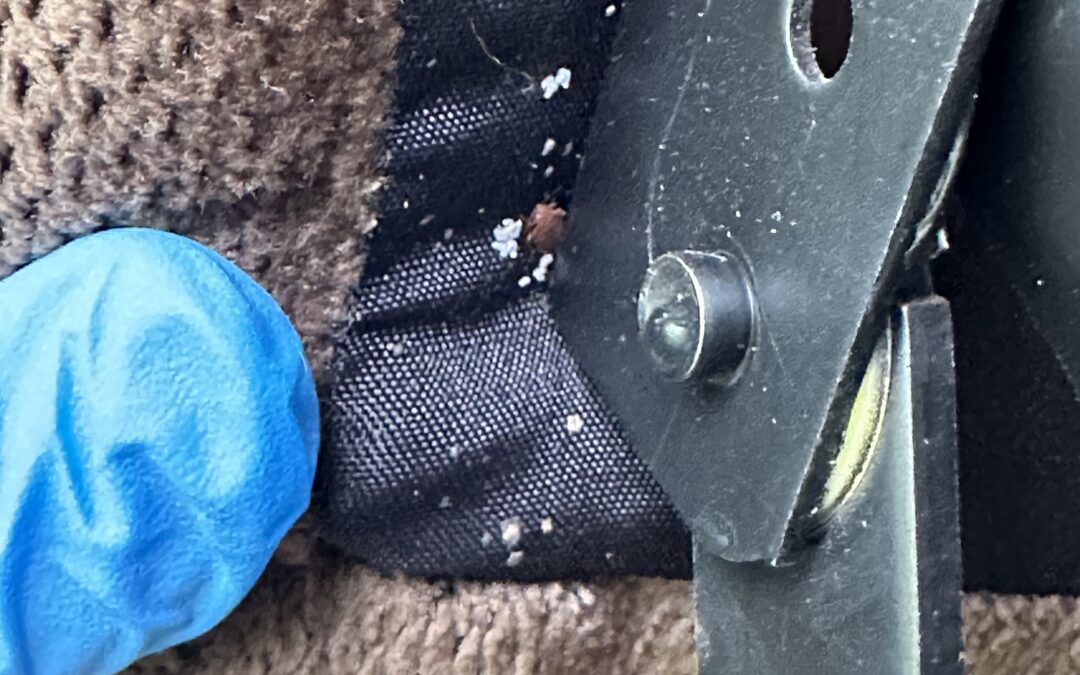
The common bed bug is a small, reddish-brown insect that feeds primarily on blood. Adult bed bugs are approximately the size of an apple seed, while younger nymphs can be extremely small and difficult to see.
Bed bugs are attracted to the carbon dioxide, body heat, and other cues associated with people. They typically hide during the day and become more active when their host is resting or sleeping.
Bed bugs can hide in much more than a mattress. Depending on the severity of an infestation, they may be found around:
- Mattress and box spring seams
- Bed frames and headboards
- Nightstands and dressers
- Couches and upholstered furniture
- Baseboards and cracks
- Behind picture frames
- Curtain folds
- Electrical receptacles
- Wall hangings
- Small cracks and crevices throughout a room
The EPA notes that bed bugs can fit into extremely small hiding places—approximately the width of a credit card.
Where Do People Pick Up Bed Bugs?
One of the most common misconceptions about bed bugs is that you have to live in a dirty home to get them. That’s simply not true.
Bed bugs are excellent hitchhikers. They can crawl into luggage, clothing, backpacks, purses and other personal belongings and then be transported back to your home.
People can accidentally encounter bed bugs in places such as:
- Hotels and motels
- Apartments and other multi-family housing
- College dorms
- Nursing homes and assisted living facilities
- Hospitals and medical facilities
- Movie theaters
- Public transportation
- Offices
- Waiting rooms
- Used furniture
- Used mattresses
- Friends’ or family members’ homes
- Other locations where people spend extended periods of time
You don’t necessarily have to spend the night somewhere to bring a bed bug home. A bed bug or two can potentially hitchhike on personal belongings and eventually establish an infestation in your home.
This is also why determining exactly where bed bugs came from can be extremely difficult. Once an infestation is discovered, there may be no way to know when or where the first bed bug entered the home.
The Bed Bug Life Cycle
Understanding the bed bug life cycle is important when treating an infestation.
Bed bugs go through several stages:
Egg → Nymph → Adult
After hatching, a bed bug progresses through five nymphal stages before becoming an adult. Nymphs must obtain a blood meal before progressing to the next stage. Under favorable conditions, the egg-to-adult life cycle can take approximately four to five weeks.
This life cycle is one reason bed bug treatment requires patience and proper follow-up. Finding one or two surviving bugs after an initial service does not necessarily mean the treatment has failed. Eggs may hatch after the initial application, and newly emerged nymphs still need to encounter an effective treatment barrier.
How We Treat Bed Bugs At GB Pest Solutions
Our bed bug treatment process begins with a thorough inspection. We look for live bed bugs, eggs, shed skins, fecal spotting and other evidence of an infestation. From there, proper preparation is extremely important.
Before our service, customers are provided with our Bed Bug Service and Customer Responsibilities Checklist. Preparation includes removing clothing and personal items from dressers, laundering linens and clothing and drying them on high heat, clearing items from underneath beds and closets, reducing clutter, and keeping items at least one foot away from perimeter walls so our technician can properly access baseboards.
All occupants and pets must also be out of the residence for the required period following treatment, and fish tanks must be properly sealed with the air pump turned off during treatment.
Proper preparation isn’t just a formality. It can make a significant difference in how effectively a bed bug treatment can be performed.
Why We Use Aprehend For A Bed Bug Treatment
For our professional bed bug treatments, we use Aprehend®, a biological insecticide containing spores of Beauveria bassiana strain GHA.
Unlike many traditional insecticides that primarily rely on chemical toxicity, Aprehend uses a naturally occurring fungus that affects insects. The spores are applied to carefully selected areas where bed bugs are likely to travel.
When a bed bug walks across a treated area, the fungal spores attach to its body. The spores can then germinate and penetrate the insect’s outer cuticle, ultimately killing the bed bug. The EPA-registered product label states that exposed bed bugs can die within approximately 7-10 days.
Below are the Label and SDS links for Aprehend:
Aprehend Works As A Transferable Treatment And Provides Long-Lasting Residual Protection
One of the interesting advantages of Aprehend is that the bed bug doesn’t necessarily have to be directly sprayed.
Aprehend is applied as strategically placed barriers. When bed bugs cross those barriers, spores can attach to them. Those contaminated bed bugs can then carry spores back toward their harborage areas, potentially exposing other bed bugs.
This gives the treatment a different approach from simply spraying individual insects that are visible at the time of service.
Another major advantage of Aprehend is its residual activity. According to the EPA-approved label, treated surfaces can remain effective for up to three months under the specified conditions.
That extended residual can be particularly useful because bed bug control isn’t always accomplished by eliminating every insect during the technician’s initial visit.
Aprehend is a Different Mode of Action and How Aprehend Works Vs Other Types of Treatments
Bed bug populations with resistance to commonly used pyrethroid insecticides can make conventional chemical treatments more challenging. Aprehend uses a completely different biological mode of action, and its EPA label specifically identifies it as effective against pyrethroid-resistant bed bugs. This is one reason biological products such as Aprehend can be an important tool in a professional integrated pest management (IPM) program.
Aprehend vs. Traditional Pesticide Treatments
Traditional chemical pesticides remain an important tool for professional pest management, and the EPA recognizes multiple pesticide classes for bed bug control. However, some bed bug populations have developed resistance to pyrethroids and related products.
Aprehend provides a different approach because its active ingredient is Beauveria bassiana, rather than a conventional neurotoxic insecticide.
It also has several practical characteristics that make it useful for professional bed bug control, including:
- A different mode of action
- Effectiveness against pyrethroid-resistant bed bugs
- Up to three months of residual activity according to the product label
- Low-odor formulation
- Ready-to-use formulation
- No need to dilute or mix the product
- Ability to target bed bugs as they travel across treated barriers
Importantly, Aprehend is not a magic spray. Successful bed bug control still depends on inspection, preparation, proper application, monitoring and cooperation from the homeowner.
Aprehend vs. Heat Treatment
Professional heat treatment is another legitimate method of controlling bed bugs. Properly performed heat treatments can kill bed bugs at all life stages when the required temperatures are reached and maintained throughout the areas where bed bugs are hiding. The EPA notes that areas being treated with heat need to reach appropriate temperatures long enough to ensure that eggs are killed.
The biggest difference is the way the two methods work.
Heat treatment is designed to kill bed bugs through elevated temperatures throughout the treatment area. Aprehend, on the other hand, leaves a biological treatment barrier that bed bugs encounter as they move through the home.
For some situations, Aprehend can be an attractive alternative because it doesn’t require heating an entire structure to elevated temperatures. It also leaves residual protection after the technician leaves, whereas heat treatment is primarily dependent on achieving lethal temperatures during the treatment itself.
The best treatment method ultimately depends on the individual infestation, structure, level of activity and circumstances of the property.
Why Customer Preparation Matters
Bed bug treatment is a partnership between the pest control professional and the homeowner.
Our preparation checklist is designed to give our technicians access to the areas where bed bugs may be hiding while reducing unnecessary hiding places. Customers are instructed to reduce clutter, clear areas around beds and baseboards, properly launder and dry clothing and linens, and follow all instructions before treatment.
Following treatment, mattresses and box springs should be placed into appropriate waterproof, zippered mattress covers as outlined in our service instructions.
We also ask customers not to use over-the-counter bed bug products before or after professional treatment unless specifically instructed to do so. Mixing different products can interfere with a professional treatment strategy, and indiscriminate pesticide use can cause bed bugs to move into new hiding locations.
A Bed Bug Treatment with Aprehend Will Take Time to Work!
The EPA emphasizes that bed bug control can take several weeks to control the issue depending on the severity of the infestation and how well everyone involved follows the treatment plan.
Our service paperwork explains to customers that the product may take time to begin eliminating the infestation and that follow-up services may be necessary. It also makes it clear that there is no guarantee that every bed bug will be eliminated after a single service.
That’s why inspection, preparation, treatment and monitoring are all important parts of professional bed bug control.
Looking for a Bed Bug Treatment?
If you’ve discovered a bed bug or suspect you may have a bed bug infestation, don’t panic and don’t start spraying every product you can find.
The first step is identifying the problem correctly and developing a treatment plan.
At GB Pest Solutions, we provide professional bed bug control, including inspection, preparation guidance and professional treatment using Aprehend®.
If you’re dealing with bed bugs in Batavia, Byron, Bergen, Leroy, Spencerport, Brockport, Churchville, Chili, or other surrounding Western New York communities, contact GB Pest Solutions to discuss your situation and determine the appropriate next step.
Don’t let bed bugs take over your home. Professional identification, preparation and treatment can make all the difference!